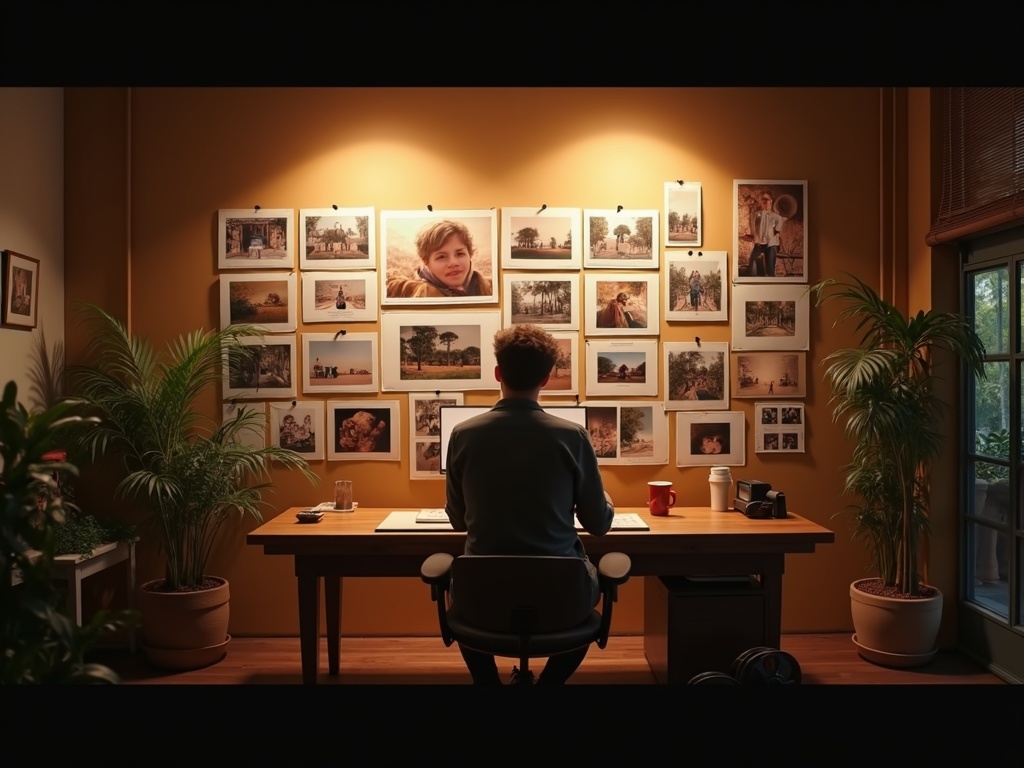
Inside the Storyboard Room: How AI is Reshaping Pre-Production
Pre-production has always been where ideas meet constraints. A creative director sits with a stack of reference images, a scriptwriter wrestles with dialogue, a producer calculates timelines and budgets. It is deliberate, sometimes exhausting, often brilliant. But it is also linear—one decision unlocks the next, and changes ripple backward through months of planning.
AI is not replacing this thinking. Instead, it is accelerating the exploration phase, allowing teams to test more ideas faster, iterate with confidence, and move into production with sharper creative vision.
The shift is subtle but profound. And it changes how commercial production teams work.
The Pre-Production Bottleneck
Traditional storyboarding is a luxury. A commercial director and art director spend days—sometimes weeks—sketching rough frames, blocking camera movement, testing composition. For larger campaigns, this is standard practice. For smaller productions or fast turnarounds, storyboards are often compressed into mood boards and verbal briefings. Nuance is lost. Assumptions go untested.
Scriptwriting follows a similar pattern: rounds of revision, feedback loops with clients and creative teams, alignment meetings. A 30-second commercial script might take two weeks to lock. A full corporate video script could take months.
This is not inefficiency; it is the nature of collaborative creative work. But it means the real creative exploration happens late in the process, when changes are expensive and timelines are tight.
AI tools are compressing this phase without sacrificing thoughtfulness.
How Teams are Using AI for Storyboarding
Visual storyboarding is the first frontier. AI image generators allow directors to:
- Generate multiple visual interpretations of a single scene in minutes, testing different cinematography angles, lighting setups, and color palettes before a single frame is shot
- Create rough animatic sequences that show pacing, timing, and visual flow without expensive motion capture or 3D rendering
- Explore alternative narratives quickly—what if the product reveal happened at the beginning instead of the end? What does that change emotionally?
A creative director at a Singapore production house might typically spend a day sketching 15 storyboard frames by hand. With AI, that same director can generate 50 visual variations across five different aesthetic approaches in two hours. Not all will be useful. But three or four will spark new directions the team hadn't considered.
The key insight: AI accelerates exploration, but human judgment selects and refines.
Script Development and Narrative Structure
On the writing side, AI is reshaping how scripts are drafted and iterated. Rather than starting with a blank page, scriptwriters are using AI to:
- Generate initial script concepts based on campaign briefs, product benefits, and target audience insights
- Expand scene descriptions and dialogue variations for A/B testing
- Analyze script pacing and suggest structural improvements
- Create multiple narrative framings for the same story—dramatic, humorous, emotional, action-driven
None of this removes the human voice. Instead, it removes the friction of the first draft. A writer no longer stares at a blank screen; they sit with 5 different script directions, evaluate them, and refine. The actual creative choice—the narrative arc, the emotional core, the authentic voice—remains human.
For corporate videos and brand storytelling, this matters enormously. Authenticity cannot be generated; it can only be recognized and refined.
Mood Boards and Visual Language Definition
Before production begins, teams need alignment on visual language. Traditional mood boards require art directors to spend hours collecting reference images, sourcing inspiration, and organizing them into coherent visual directions.
AI mood board generators can now create comprehensive visual systems in hours: color palettes, texture libraries, compositional frameworks, mood and atmosphere guidelines. These become the briefing document for cinematographers, lighting designers, and production designers.
This is not about letting AI define the brand aesthetic. It is about having more thoughtful reference material faster, so creative conversations are richer and more specific.
Where Human Judgment Still Leads
The most important pre-production decisions remain deeply human:
Narrative Strategy — Why are we telling this story now? What will the audience feel at the end? These questions cannot be answered by AI; they require understanding brand psychology, market position, and human emotion.
Casting and Performance — AI can suggest visual archetypes, but it cannot predict how a real actor will bring life to a character, or how authenticity will land with an audience.
Risk and Authenticity — Brands often play it safe with creative. AI can generate technically polished concepts, but it cannot tell whether a bold idea will resonate or alienate. That judgment belongs with experienced creatives who understand their audience.
Collaborative Iteration — The magic of pre-production often happens in disagreement: when a director challenges the art director's color palette, or a copywriter pushes back on the narrative structure. These tensions produce better work. AI accelerates the process but cannot replace the friction that generates excellence.
The Workflow Integration
Smart production teams are embedding AI into their pre-production workflow at specific moments:
- Concept Phase: AI generates visual and narrative options for creative review
- Development Phase: Teams refine selected directions; AI expands and explores variations
- Lockdown Phase: Human judgment finalizes storyboards, scripts, and visual guidelines
- Production Prep: AI-generated references inform department heads and crew briefings
The rhythm is faster, but the decision-making remains human.
The Competitive Advantage
Teams using this approach report clearer briefs going into production, fewer creative revisions on set, and faster turnaround on complex projects. Not because AI made better decisions, but because more decisions were tested and refined before cameras rolled.
For production companies like Glory Forest working on commercial timelines, this means tighter budgets and more confident creative outcomes.
What Hasn't Changed
The craft still matters. Understanding camera language, narrative structure, and visual storytelling remains fundamental. AI tools do not teach you how to build emotional tension in 30 seconds, or why a particular color choice will resonate with an audience. They simply expand the canvas on which experienced creatives work.
The teams producing the best work are not the ones relying on AI to make creative decisions. They are the ones using AI to explore faster, test bolder ideas, and have more informed conversations about what actually works.
Pre-production is where vision becomes reality. AI is not changing that. It is simply giving the team more time to think.