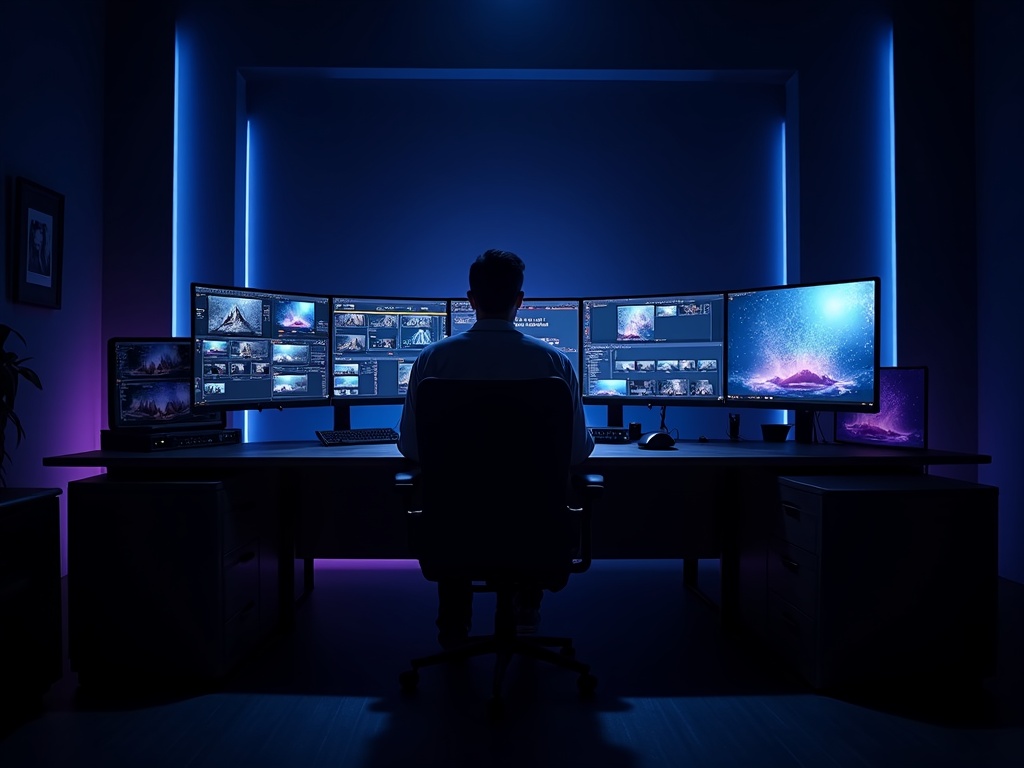
The Art of Invisible Editing: How AI is Shaping the Director's Cut
Every frame tells a story. But getting there — cutting, color-correcting, pacing the narrative — has always been where directors lose days, weeks, and sanity in the edit suite. Now, AI is stepping into that space, not as a replacement for artistic vision, but as a collaborator that understands what a director is trying to say before they finish saying it.
The question isn't whether AI can edit. It clearly can. The real question is: what does it mean for creative direction when a machine can anticipate your choices?
The Invisible Collaborator
Traditional editing has always been a negotiation between intention and reality. A director walks into the edit suite with a vision — pacing, emotional beats, the exact moment a cut should land. The editor, armed with footage, timing software, and years of intuition, translates that into cuts and transitions. It's collaborative, sometimes contentious, and deeply human.
AI editing tools are now threading themselves into this workflow in subtle ways:
Intelligent scene detection — recognizing action beats, dialogue pauses, and emotional peaks across hours of raw footage and flagging the most usable takes without manual review.
Adaptive pacing — analyzing music, dialogue rhythm, and scene content to suggest cut points that feel rhythmically natural, learning from the director's established pattern as the edit progresses.
Automated color and sound balancing — applying consistent grading and audio levels across disparate footage sources, so the editor spends less time on technical uniformity and more on creative storytelling.
Motion-matched transitions — detecting movement continuity between shots and suggesting seamless transitions based on actual spatial geometry rather than generic dissolves.
The key word here is "suggest." The best AI editing isn't autonomous. It's anticipatory. It does the technical groundwork so the director's vision doesn't drown in logistics.
Where AI Editing Works Best
Not every project benefits equally from AI-assisted editing. Understanding the fit matters.
Fast-turnaround campaigns — Brands launching products need 5-10 variations of a 30-second spot across platforms. AI can generate initial cuts and color passes that take hours of manual work and compress them into minutes, freeing the creative director to focus on which version lands emotionally with the audience, not whether the skin tones match across shots.
Dialogue-heavy corporate content — Training videos, internal communications, interview-based documentaries. AI can auto-sync transcripts to footage, flag the best soundbite moments, and construct a narrative skeleton in hours. The director then crafts the nuance.
Social media content at scale — If you're producing 50 TikToks, 30 Reels, and 20 YouTube Shorts from the same shoot, AI can generate rough cuts of each, adapt aspect ratios and timing to platform specs, and batch-process the technical elements while your team focuses on the ones that need the human touch.
Sports, live events, and multi-camera shoots — When you're working with 4-8 camera angles and limited time to cut a highlights reel, AI can synthesize multiple streams into coherent sequences, suggest narrative structure based on action intensity, and create rough cuts that a human editor then refines into broadcast quality.
Where it struggles: nuanced emotional storytelling, stylistic experimentation, and films where the editing itself is the art form. Editing that breaks expectations, that makes you feel something by not cutting when you expect it to — that remains stubbornly human territory.
The Myth of the Hands-Off Director
One concern haunting creative directors is the fear that AI will seduce studios into a workflow where the director becomes a choice-maker rather than a maker. "We'll just let the AI do most of it and you approve the final cuts."
That's a business decision, not a technological inevitability. And it's worth resisting.
The best commercial work we see — whether it's a bank's brand film, a tech launch, or a luxury product showcase — carries directorial fingerprints. The pacing has personality. The color work feels intentional. The cutting has rhythm that matches the brand's voice, not just the footage's content.
AI editing tools should expand what a director can control, not contract it. They should eliminate the busywork — the color-matching, the transcription syncing, the technical passes — so there's more time for the directorial choices that actually matter: which emotional note lands, what does this cut feel like, does this pace tell the story we want told?
Building Workflow with AI in Mind
For production companies and agencies already thinking about how to integrate AI editing, the framework is less about "when do we use AI" and more about "what does our team's workflow look like now, and where are the friction points?"
Ask yourself:
- Where do we spend the most time on tasks that don't directly serve the creative vision?
- What repetitive work is depressing our team's energy and slowing the schedule?
- Which project types are we taking on mainly for revenue, not because they excite us creatively?
- Where do we have talented editors bottlenecked on technical work instead of storytelling?
Those are the places where AI editing tools fit. Not everywhere. Strategically.
A director might use AI to generate five rough cuts of a 60-second commercial, each with different pacing and emphasis, then spend the afternoon making micro-adjustments to the one that feels right. Another director might use it to instantly sync and organize 20 hours of interview footage so they can spend their time building narrative rather than hunting for quotes.
Glory Forest has been experimenting with this hybrid model — using AI to accelerate the pre-edit and technical passes while keeping human directors, colorists, and sound engineers on the creative and emotional labor. The result isn't faster production for its own sake. It's more time for the choices that matter.
The Unmistakable Mark of Choice
Here's what won't change: audiences can sense when a piece of content was crafted with intention. The edit doesn't need to be technically flawless to feel intentional. In fact, sometimes the most memorable edits are slightly imperfect — a cut that's a frame too long, a transition that surprises you, a color grade that feels slightly desaturated because that's the brand's mood.
These marks of human choice are what distinguish great commercial work from competent content. AI can help you get to that point faster. But it can't decide what the brand should feel like. Only humans can.
The future of editing isn't AI replacing directors. It's directors with smarter tools, more time, and the freedom to focus on why they're making the cut instead of how many hours the technical work will take.